
Industrial Rivet Nut Range
We offer a comprehensive range of rivet nuts designed to create a reliable, high-strength metric thread in sheet metal, metal profiles and thin components. They are the ideal fastening solution when installation access is limited to only one side of the workpiece (blind installation), allowing a strong threaded fixing to be added without conventional tapping or welding.
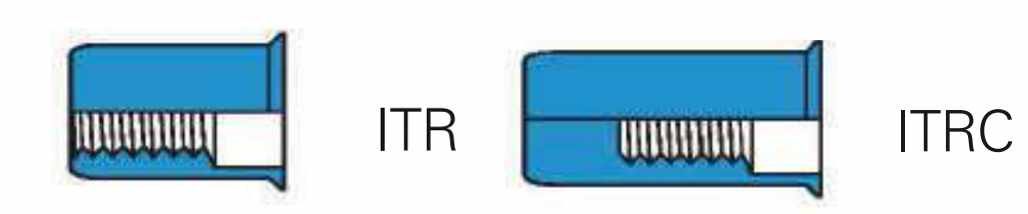
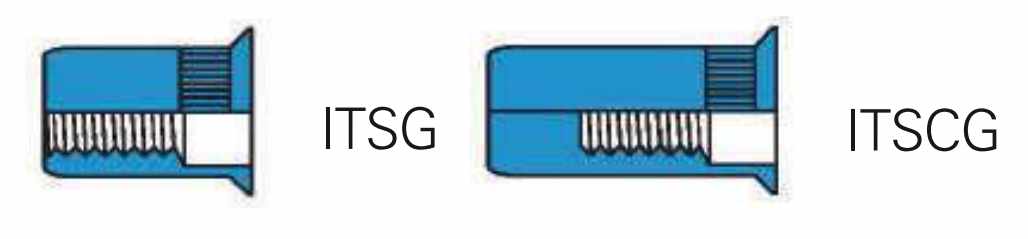
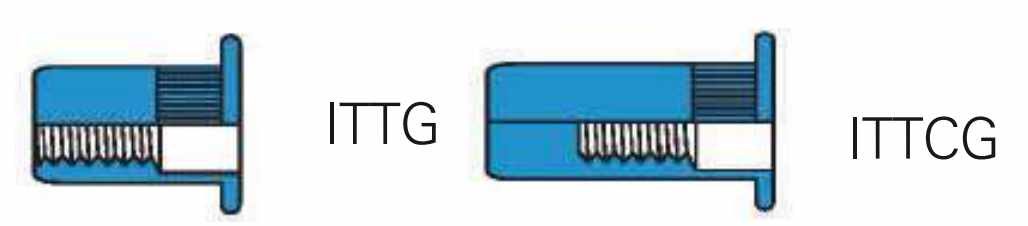
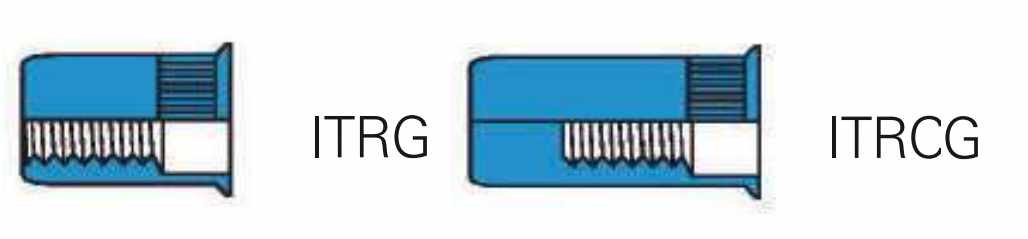
Our technical range includes different body geometries, head types and configurations, adapted to the mechanical requirements and available space of each project. The range includes cylindrical and grooved rivet nuts, as well as hexagonal and semi-hexagonal models with flat, countersunk or reduced heads.
Rivet Nut Catalogue and Configurations
Below you can explore the available rivet nut models and configurations:
This variety makes it possible to select the most suitable rivet nut according to the material thickness, available space, required strength and type of assembly.
Body Geometries and Applications
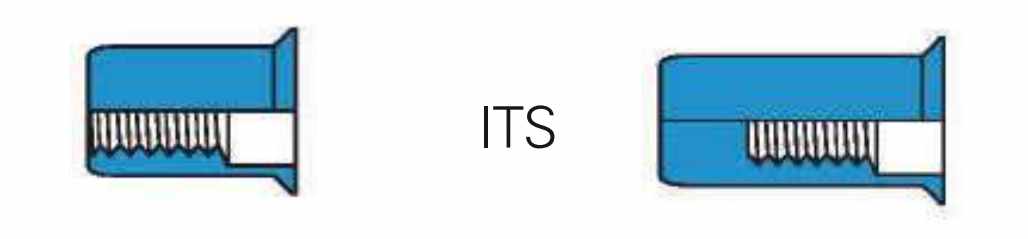
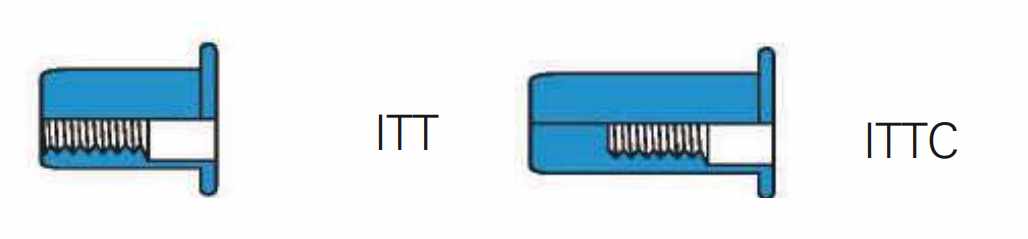
1. Cylindrical and Grooved (ITS, ITT, ITTC, ITTG, ITRG)
These are the most versatile rivet nuts. The cylindrical body is installed in standard round holes. Grooved versions provide additional friction against the wall of the hole, increasing resistance to rotation in materials such as aluminium or engineering plastics.
2. Hexagonal and Semi-hexagonal (IER, IERC, IERSE)
Designed for installation in pre-punched or laser-cut hexagonal holes. This geometry prevents the nut from rotating under very high tightening torques, making it suitable for demanding mechanical applications.
3. Head Types: Flat, Reduced and Countersunk
- Flat Head: Provides the largest bearing surface and supports high pull-out loads.
- Reduced / Ultra-reduced Head: Allows the nut to sit almost flush with the surface without countersinking the sheet.
- Countersunk Head: Ideal for completely smooth, flush finishes in pre-countersunk holes.
Manufacturing Materials
To ensure long-lasting performance against corrosion and mechanical stress, the following materials are available:
- Zinc-plated Steel: Standard corrosion protection for indoor use and general industry.
- Stainless Steel (A2 / A4): Superior resistance to weathering, marine environments and chemicals.
- Aluminium: A lightweight solution for the automotive, HVAC and lightweight-structure sectors.
Frequently Asked Questions about Rivet Nuts
How are rivet nuts installed?
The rivet nut is inserted into the hole in the panel. A manual, pneumatic or battery-powered rivet nut tool threads onto the mandrel and pulls the body of the nut, creating a bulge or clamping deformation on the blind side.
What is the difference between a cylindrical and a hexagonal rivet nut?
A cylindrical rivet nut is installed in a conventional round hole, whereas a hexagonal rivet nut requires a hexagonal hole. The hexagonal design withstands much higher tightening torque without rotating.
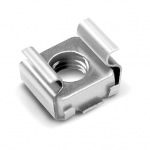
See also our range of cage nuts for profiles and metal cabinets.