Si se puede soldar un perno, Bearfix se lo suelda.
Drawn Arc With Ceramic Ferrule – ARC

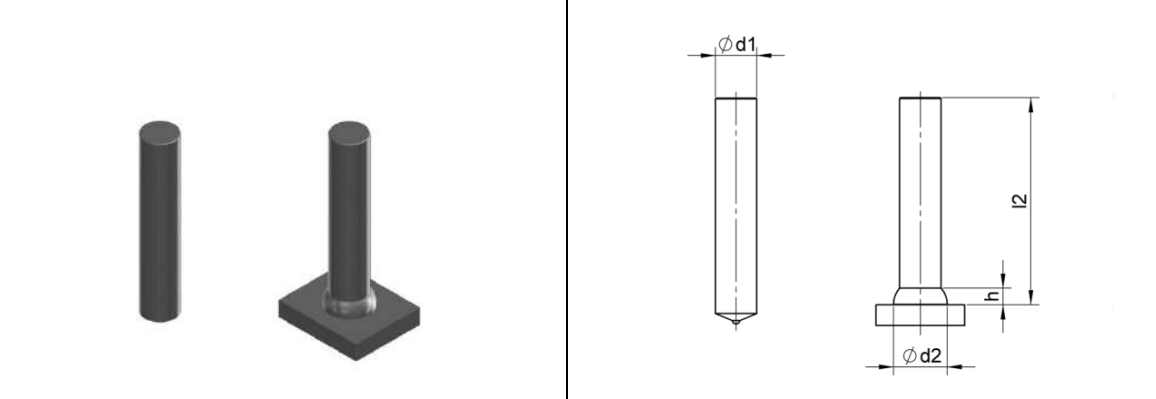
Arc stud welding due to its reliability is the most widely used process. Due to its depth, it is indicated for thicker sheet thicknesses. It is used with shielding ceramics and in some (few) cases with shielding gas. The bolts have a pre-taper and from a certain thickness an aluminum flux.
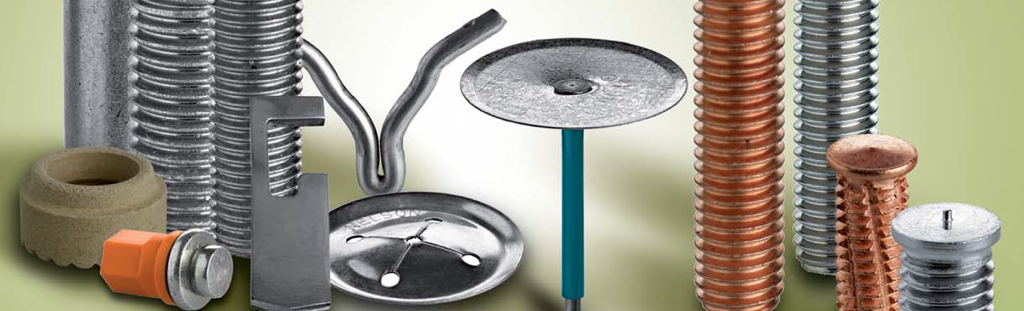
All Kinds Of Arc Welding Bolts In Stock. For applications in the construction, shipbuilding, insulation, fire protection, metallurgical industry and a myriad of applications.
Technical data
| Stud type | Designation | Material | Standards | Mechanical characteristics | |
|---|---|---|---|---|---|
|
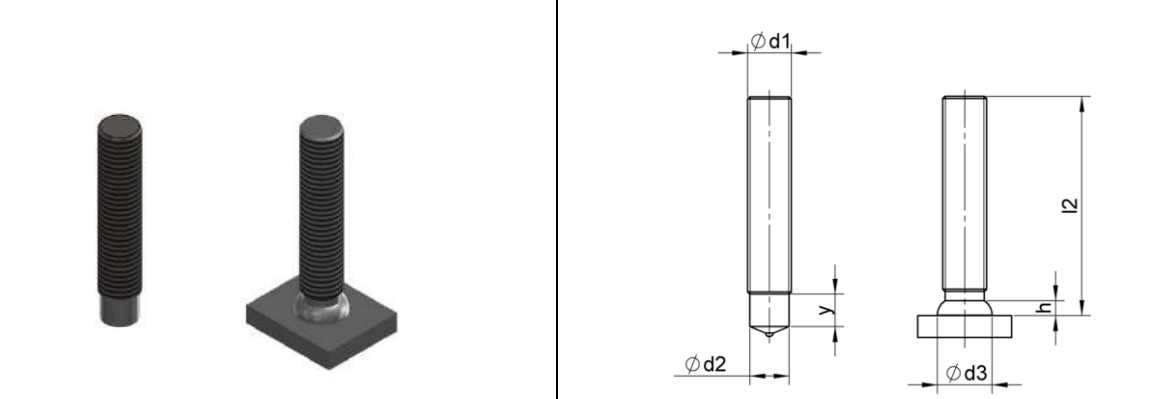
Welding Stud drawn arc with ceramic ferrule or gas |
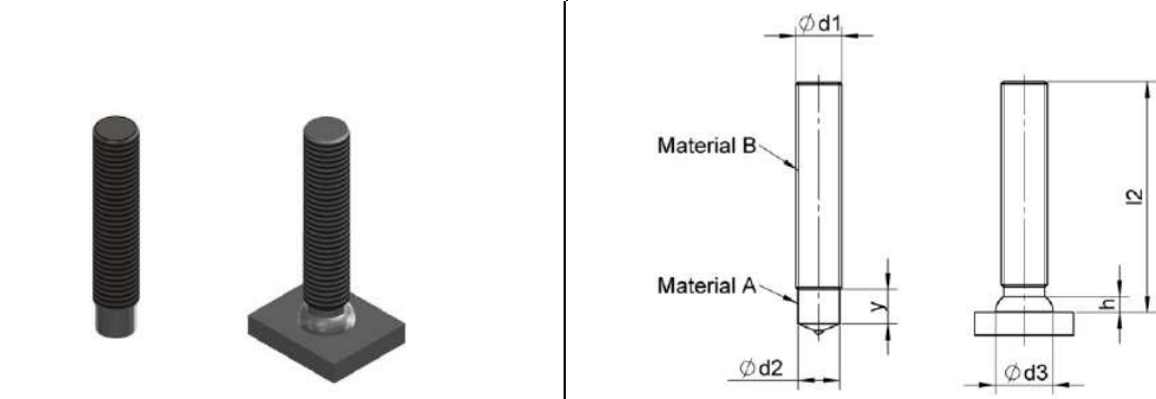
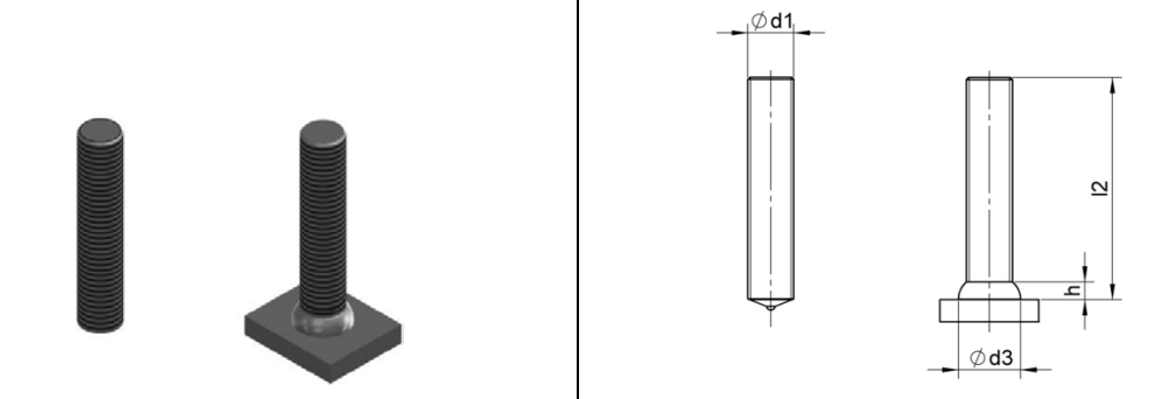
Threaded stud
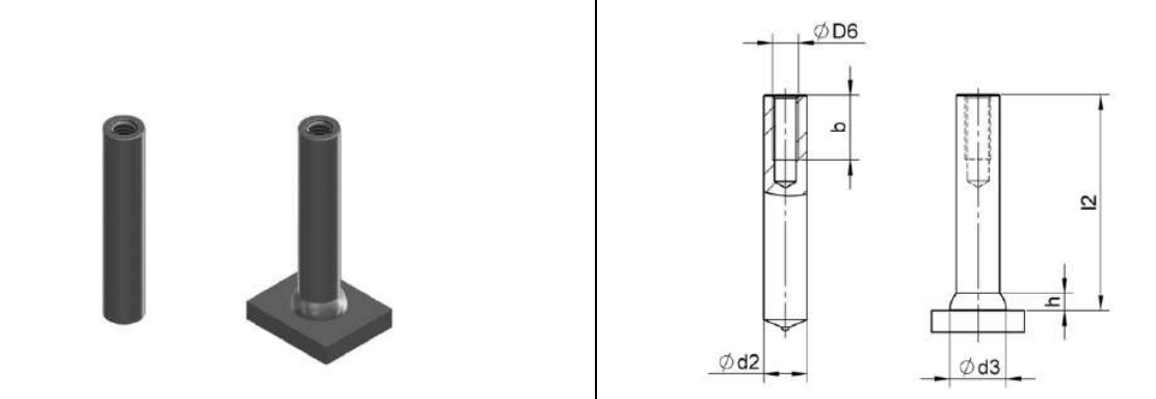
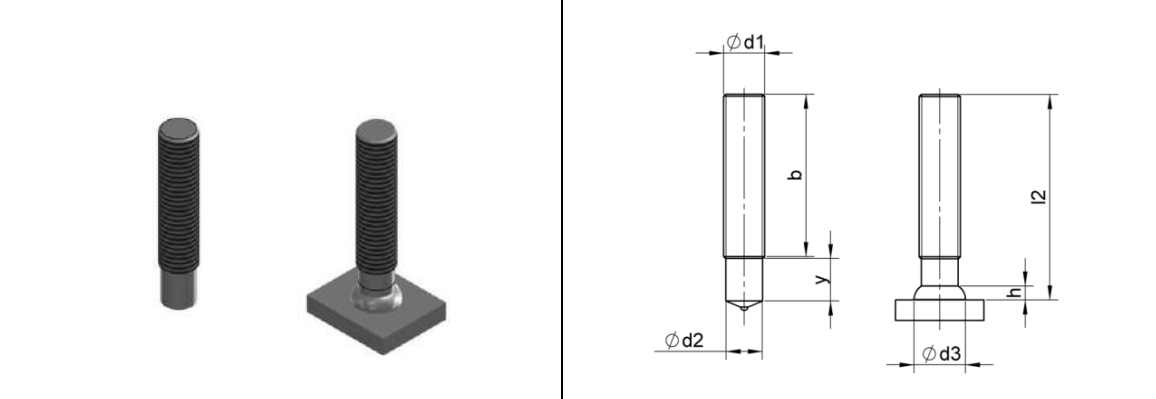
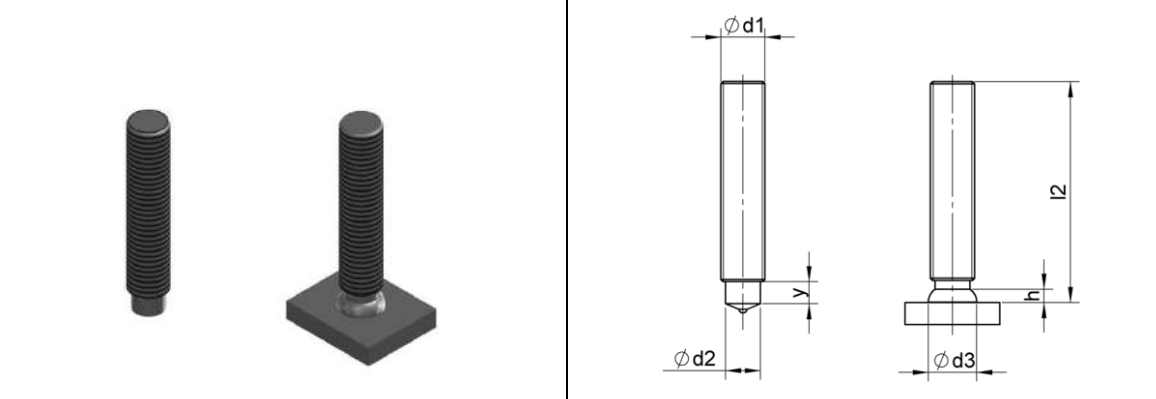
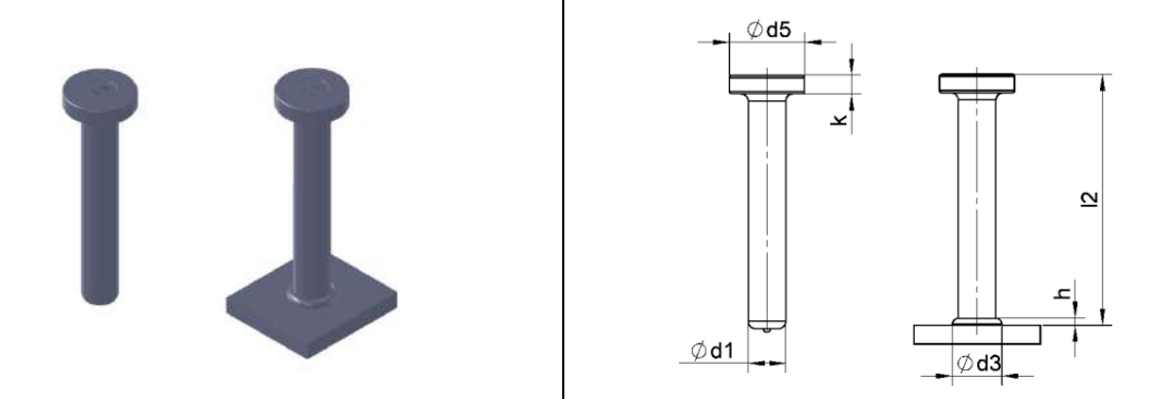
Threaded stud with base reduced Without thread Shear Connector |
PD (MPF)
RD (MR) UD (S) SD (KB)
|
Steel (4,8 ) 1.4301/03 (A2 50 ) Steel (S235J2+C450) |
EN 20890-1 EN 10025 EN 10088-1 |
Rm ≥ 420 N/mm2/ReH ≥ 340 N/mm2 A5 ≥ 14% Rm ≥ 500 N/mm2 Rm ≥ 450 N/mm2 Rm ≥ 570-780 N/mm2 Rp0,2 ≥ 350N/mm2, A5 ≥ 25% |
According norm EN ISO 13918
Material combinations according to EN ISO 14555
| Stud material | Base material | ||||
|---|---|---|---|---|---|
| ISO/TR 15608 Material groups 1 to 6, 11.1 |
ISO/TR 15608 Material groups 1 to 6, 11.1 and galvanised steel sheets and metal-coated sheets up to the maximum μm |
ISO/TR 15608 Material group 8 | Copper and copper alloys, e.g. CuZn37 (CW508L) | ISO/TR Material groups 21 to 22 | |
| Copper-plated steel (4.8) | 1 | 2 | 1 | 2 | – |
|
1.4301/03 (A2-50 ) |
1 | 2 | 1 | 2 | – |
|
CuZn37 (Ms63) |
2 | 2 | 2 | 1 | – |
|
EN AW-AI99,5 |
– | – | – | – | 2 |
|
ENAW-AIMg3 |
– | – | – | – | 1 |
| 1 = Good weldability | 2 = Good weldability depending on the application | – = Not suitable | -1 = soldable | ||
Minimum load capacity (tensile strength) and permissible tightening torque by material
| Stud | Steel (4.8¹) μ = 0,18 Rp0,2 = 340 N/mm2 | 1.4301/03(A2-501)) μ = 0.18 Rp0,2 = 210 N/mm2 | AIMg3 F23 μ = 0.18 Rp0,2 = 170 N/mm2 | CuZn37 (Ms63) μ = 0.18 Rp0,2 = 170 N/mm2 | ||||
|---|---|---|---|---|---|---|---|---|
| Tensile strength (kN) | Tightening torque (Nm) | Tensile strength (kN) | Tightening torque (Nm) | Tensile strength (kN) | Tightening torque (Nm) | Tensile strength (kN) | Tightening torque (Nm) | |
| M3 | 1,1 | 0,8 | 0,7 | 0,5 | 0,5 | 0,4 | 0,8 | |
| M4 | 1,8 | 1,8 | 1,1 | 1,1 | 1 | 0,9 | 1,4 | 0,6 |
| M5 | 3 | 3,6 | 1,9 | 2,3 | 1,6 | 1,9 | 2,3 | 1,3 |
| M6 | 4,3 | 6,1 | 2,7 | 3,8 | 2,2 | 3,1 | 3,2 | 2,7 |
| M8 | 8 | 15 | 4,9 | 9,5 | 4 | 7,5 | 6 | 4,5 |
| M10 | 13 | 30 | 7,8 | 19 | 11 | |||
Type CDI (PT)
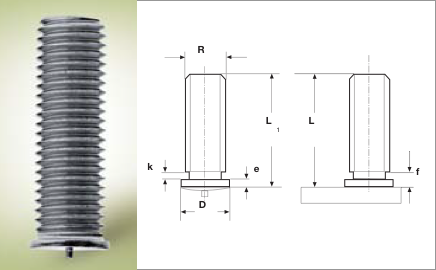
Características Studs de acuerdo con norma EN ISO 13918
| R | L + 0,6 | D ± 0,2 | e | K max | L |
|---|---|---|---|---|---|
| M3 | 5-4o | 4,5 | 0,7 | 1,5 | = L1 – 0,3 |
| M4 | 6-45 | 5,5 | 1,4 | 1,5 | = L1 – 0,3 |
| M5 | 6-50 | 6,5 | 0,8 | 2 | = L1 – 0,3 |
| M6 | 8-55 | 7,5 | – | 2 | = L1 – 0,3 |
| M8 | 10-60 | 9 | 1,4 | 3 | = L1 – 0,3 |