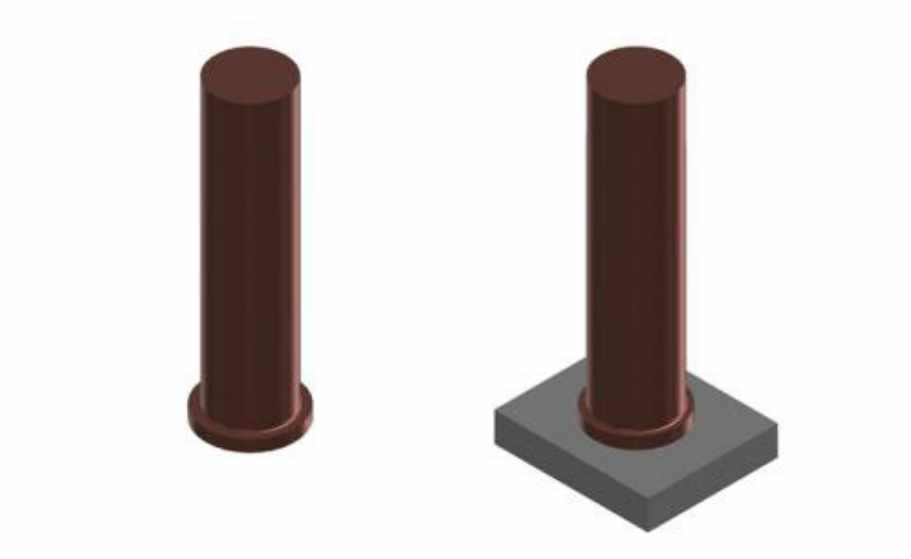
Capacitor Discharge Stud Welding

Capacitor discharge stud welding works by releasing the energy stored in a capacitor bank. This discharge produces an extremely fast fusion between the stud and the base material, with an approximate welding time of 2 to 3 milliseconds.
Due to the speed of the process and its low heat input, capacitor discharge welding is particularly suitable for thin sheets and materials where marks, deformation or significant alteration on the reverse side of the workpiece must be avoided.
The studs used in this process incorporate a specially prepared ignition tip, designed to facilitate arc initiation and achieve a fast and repeatable weld.
At Bearfix we offer studs, consumables and solutions for capacitor discharge welding, with different configurations to suit the requirements of each application.
Capacitor discharge welding solutions
The Bearfix capacitor discharge welding range includes different types of studs and accessories.
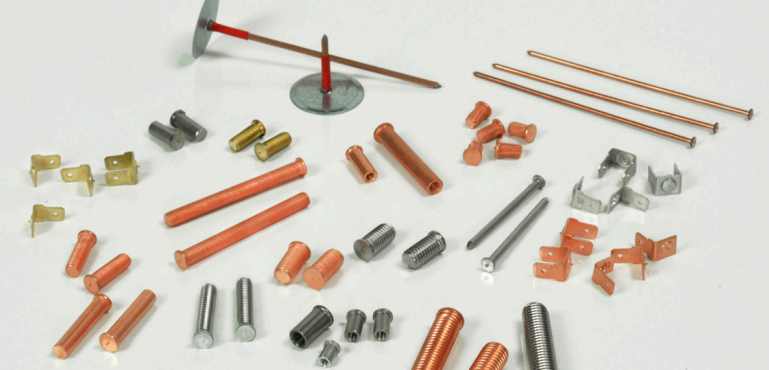
Depending on the type of joint required, you can choose between externally threaded studs, unthreaded studs and internally threaded studs, as well as special solutions and insulation accessories.
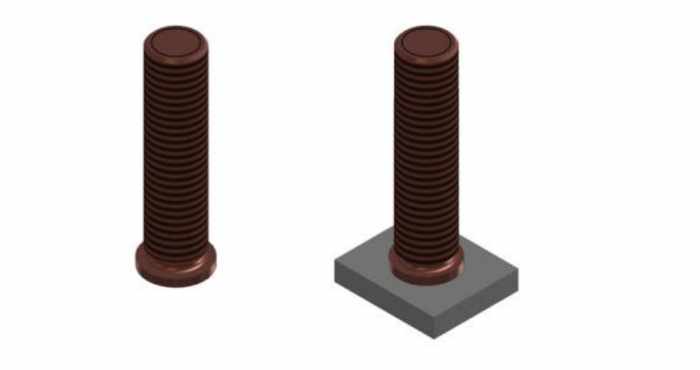
- PT / CD1: threaded studs for capacitor discharge welding.
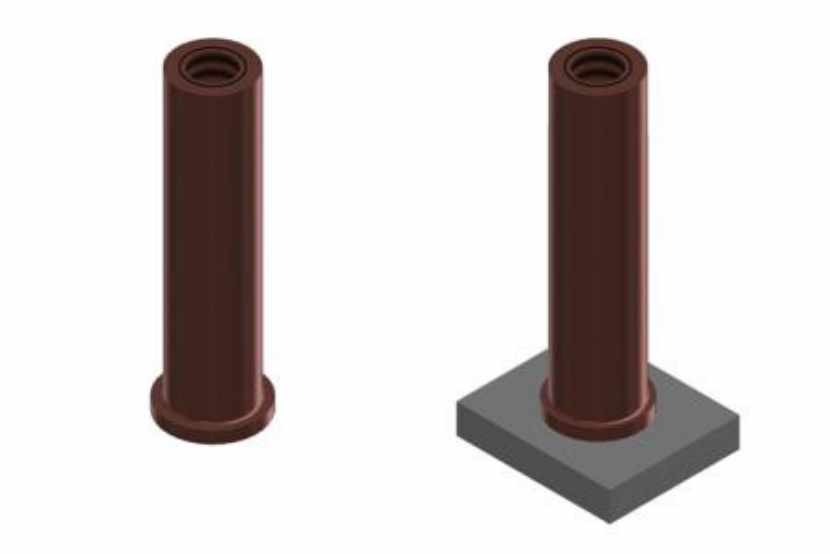
- IT / CD6: internally threaded studs for capacitor discharge welding.
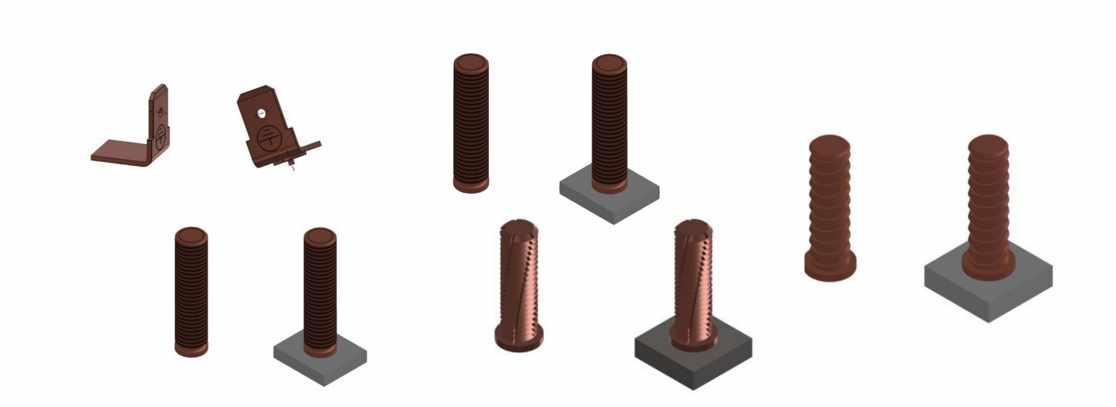
- UT / CD2: smooth or unthreaded studs for capacitor discharge welding.
- Special studs: specific solutions for applications requiring special geometries or configurations.
- Pins, clips and caps: accessories mainly intended for insulation applications.
Stud types
Select each family below to view its characteristics, dimensions, materials and available references.
Characteristics of capacitor discharge welding
The main characteristic of this process is its high welding speed. The energy stored in the capacitors is released in just a few milliseconds, producing the fusion required to join the stud to the base material.
This speed considerably reduces heat input into the material. For this reason, the process is particularly suitable for thin sheet applications where marks or deformation on the reverse side must be minimised.
The studs incorporate a specially prepared ignition tip to initiate the welding process and promote a uniform joint.
Threaded, unthreaded and internally threaded studs
The capacitor discharge range allows the stud type to be selected according to the required fastening.
PT / CD1 studs have an external metric thread and are intended for applications where subsequent fastening with a nut or another threaded component is required.
UT / CD2 studs are smooth or unthreaded studs, suitable for applications where the stud itself acts as a fastening or support element.
IT / CD6 studs have an internal thread, providing an alternative solution when a threaded fastening point is required directly inside the stud.
Available materials
The range includes different materials to suit the characteristics of the stud and the base material being welded.
Materials specified in the technical documentation include:
- Copper-plated weldable steel grade 4.8.
- Stainless steel 1.4301/03 (A2-50).
- CuZn37 (Ms63).
- EN AW-Al99.5.
- EN AW-AlMg3.
The material should be selected according to both the stud and the base material, together with the appropriate welding parameters required to achieve a correctly executed joint.
Standards and mechanical characteristics
The different stud types and materials are associated with the corresponding standards specified in the technical documentation.
These include:
- ISO 898-1
- ISO 3506-1
- EN 12166
- EN 573-3
- EN 1301-2
Stud characteristics are specified in accordance with EN ISO 13918.
Technical data
| Stud type | Designation | Materials | Standards |
|---|---|---|---|
| Threaded | PT (CD1) | Copper-plated weldable steel 4.8 1.4301/03 (A2-50) CuZn37 (Ms63) EN AW-Al99.5 EN AW-AlMg3 | ISO 898-1 ISO 3506-1 EN 12166 EN 573-3 EN 1301-2 |
| Unthreaded | UT (CD2) | According to configuration | According to material |
| Internally threaded | IT (CD6) | According to configuration | According to material |
Stud characteristics according to EN ISO 13918.
Applications
Capacitor discharge welding is particularly suitable for applications where a stud must be attached quickly to sheet metal or another metallic component without introducing a high amount of heat.
Applications include different industrial fastening, assembly and mounting operations, especially when working with thin materials or when access to the reverse side of the workpiece is not possible.
The choice between a threaded, unthreaded or internally threaded stud depends on the function the element will perform after welding.
Selecting the correct stud
To correctly select a capacitor discharge welding stud, several factors should be considered:
- Fastening type: threaded, unthreaded or internally threaded.
- Stud diameter or metric thread.
- Required length.
- Stud material.
- Base material and thickness.
- Available access for welding.
Each Bearfix stud family has its own technical page where the corresponding dimensions and references can be checked.
Bearfix capacitor discharge solutions
Bearfix offers a range of capacitor discharge welding studs together with special solutions and accessories for different welding applications.
If you need to select a stud, consumable or accessory and are unsure which reference is suitable, contact our technical team and we will help you find the configuration that best suits your application.
Check our capacitor discharge stud range and find the right solution for your application.